Act I
The ID badge skidded across the metallic floor before the capsule alarms went quiet.
It spun beneath the harsh white lights, clipped lanyard trailing behind it, then stopped beside the landing strut of a sleek space capsule. The gray plastic faced upward.
Dr. Carter — Chief Systems Architect.
A second later, the man it belonged to hit the hangar floor.
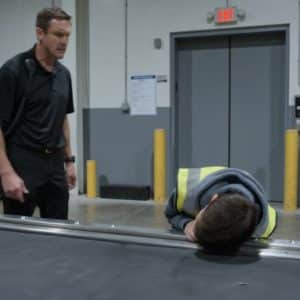
The punch had turned his face hard enough to knock him sideways. The kick that followed stole the breath from him. Dr. Carter dropped near the capsule, one hand braced against the metal floor, a small mark appearing near his lip as the air tightened in his chest.
The entire private space tourism hangar froze.
Engineers in gray uniforms stopped beside orbital screens. Investors rose halfway from their seats. Private security guards shifted but did not move fast enough. Black SUVs waited beyond the hangar doors like sleeping animals, their tinted windows reflecting the scene.
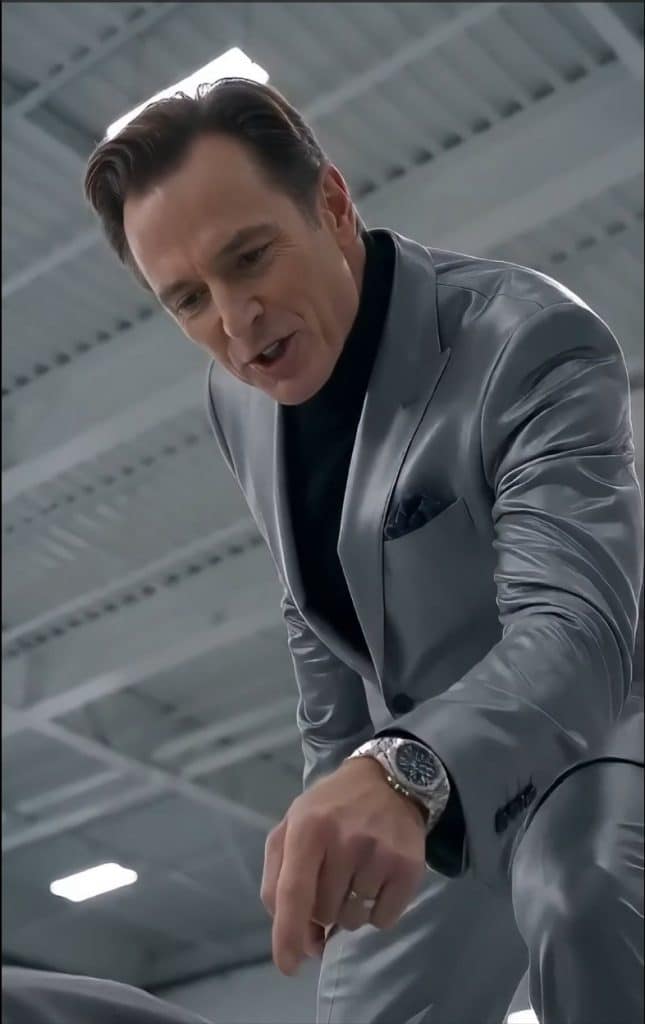
Above Dr. Carter stood Silas Vane.
Silver-gray suit. Black turtleneck. Expensive watch. Predatory investor smile.
A man who had poured enough money into the mission to believe it gave him ownership over the future.
He looked down at Dr. Carter with open contempt.
“Space is for billionaires,” Silas said. “Not mechanic trash dreaming above his station.”
The words struck the hangar harder than the blow.
Dr. Carter stayed low, breathing slowly through the pain. His dark hair had fallen across his forehead. His gray engineering jacket was wrinkled from the fall. His sharp, tired eyes lifted toward Silas with a coldness that did not belong to a frightened man.
It belonged to someone calculating.
Silas stepped closer.
“You touch that capsule again,” he said, “and I’ll have you dragged out before launch.”
No one spoke.
The capsule gleamed behind them, beautiful and dangerous in the way machines become when men mistake ambition for control.
Then footsteps came fast from mission control.
The project director rushed across the hangar with two engineers and a security officer behind her. Dr. Lena Brooks wore a navy aerospace suit, a mission headset, and the expression of someone watching a launch sequence collapse for reasons no software could predict.
She saw Dr. Carter on the floor.
Then she saw the badge.
Her face hardened.
She stepped between him and Silas.
“Dr. Carter,” she said, voice formal and sharp, “the launch board is waiting for your final clearance.”
The hangar gasped.
Silas looked down.
Chief Systems Architect.
His face went pale.
“Dr… Carter?”
Carter slowly rose beside the capsule he alone had the authority to clear.
Act II
Ethan Carter had spent his childhood building machines that were never supposed to fly.
Paper gliders from grocery bags. Cardboard rockets taped around soda bottles. A telescope made from scratched lenses and patience. Most of them failed. Some failed spectacularly enough to make his mother ban experiments from the kitchen for an entire summer.
Ethan did not mind failure.
Failure answered questions honestly.
His father was a factory mechanic in Ohio who believed every machine had a mood. He could listen to an engine and hear the part that had begun to lose faith. He taught Ethan to respect anything with stored energy, spinning mass, heat, pressure, or human lives depending on it.
“Never trust a machine just because a rich man wants it to work,” his father once said.
Ethan was thirteen then, too young to understand how often that sentence would save him.
He studied aerospace engineering with scholarships, loans, and a stubborn refusal to sleep when there was still a problem unsolved. Professors called him brilliant. Classmates called him intense. Employers called him difficult whenever he refused to approve unsafe timelines.
His career moved upward, but never smoothly.
He walked away from one company after executives tried to bury a failure report. He was removed from a launch review after telling a board their timeline was “a public relations schedule, not an engineering schedule.” He gained a reputation that made recruiters cautious and real engineers loyal.
Then Horizon Arc called.
The private space tourism company had money, ambition, celebrity passengers, and a capsule design with one unresolved problem no one liked discussing in front of investors. The reentry control system worked on paper, passed simulations under ideal conditions, and made Ethan Carter deeply uncomfortable.
He joined only after demanding authority over final systems clearance.
The board hated the condition.
Dr. Lena Brooks insisted on it.
Lena had built the technical program from chaos. She understood the difference between a launch director and a showrunner. Investors wanted spectacle. Reporters wanted history. Billionaires wanted to say they had touched the edge of the sky.
Lena wanted everyone alive afterward.
So did Carter.
For eighteen months, he lived inside the capsule’s problems. He tracked thermal variations, navigation lag, pressure behavior, backup response timing, human factors, error chains, and the thousand tiny ways a beautiful machine could become unforgiving.
He slept in the hangar more than once.
He knew every panel seam.
Every software patch.
Every engineer who had worked late enough to stop speaking in full sentences.
The badge marked Chief Systems Architect, but titles meant less to him than responsibility. The final clearance was not a ceremonial signature. It was the last line between ambition and recklessness.
Silas Vane did not understand that.
Silas had become the public face of the investor group by turning space tourism into a luxury myth. He called it “the next frontier for those brave enough to buy into tomorrow.” He wore silver suits, gave interviews beside capsules, and spoke about humanity while pricing seats beyond the reach of nearly all humans.
He did not build.
He announced.
He did not test.
He promised.
And when Carter delayed final clearance over a guidance redundancy concern, Silas took it personally.
The mission had celebrities scheduled. A documentary crew booked. Luxury clients waiting. Markets watching. Silas wanted the capsule cleared, polished, and ready to rise.
Carter wanted one more fault simulation.
That was the conflict.
Not personality.
Not ego.
Physics.
But Silas believed money bent every system eventually.
He had never met a man like Ethan Carter at the exact wrong moment for arrogance.
Act III
The first argument began over a panel light.
It was small.
Almost insulting in its simplicity.
A status indicator near the capsule access ring flickered green, then amber, then green again during a dry systems check. One of the junior engineers noted it. Most of the investor seating missed it entirely.
Carter did not.
He stepped toward the capsule, tablet in hand, and crouched near the access panel.
Silas watched from the investor area, irritation already tightening his smile.
“What now?” he called.
Carter did not look back.
“Signal inconsistency on auxiliary guidance channel.”
Silas gave a short laugh.
“In English?”
“In English, I’m not clearing the capsule until I know why it blinked.”
Several engineers went still.
They had heard that tone before.
It meant the schedule had just lost.
Silas walked across the metallic floor with the theatrical patience of a man performing control for an audience.
“We have a launch board convening in fifteen minutes,” he said.
“I know.”
“We have passengers arriving tomorrow.”
“I know.”
“We have investors sitting right there.”
Carter opened the panel.
“I know.”
Silas’s smile vanished.
“Then perhaps act like it.”
Carter finally looked up.
“I am.”
The answer landed badly.
A few media staff near the back exchanged glances. An engineer lowered her eyes to hide approval. Silas noticed both and hated them for it.
He looked at Carter’s gray jacket, his tired eyes, the grease smudge near one cuff.
“Are you maintenance?” Silas asked.
Carter paused.
The ID badge had twisted backward during his crouch, hiding the title.
“I’m systems.”
“That’s not what I asked.”
Carter returned to the panel.
“It’s the answer that matters.”
Silas stepped closer.
“You people always think caution makes you important.”
Carter’s hands stilled.
“You people?”
“Engineers. Mechanics. Men with clipboards who believe slowing genius down makes them part of it.”
The hangar quieted.
Carter stood.
“Genius that cannot survive inspection is marketing.”
The sentence went through the room like static.
Silas’s face hardened.
“You work because men like me fund the dream.”
“No,” Carter said. “Men like you fund the launch. The dream survives only if we bring people home.”
That was the moment Silas lost control.
He saw investors watching. Engineers listening. Security uncertain. The capsule behind Carter, silent and enormous, suddenly seemed less like a product and more like a witness.
Silas punched him.
Carter stumbled, hit the capsule support rail, and dropped toward the floor. Before he could fully recover, Silas drove a hard kick into him, forcing the air from his lungs. His ID badge snapped loose and skidded across the metal.
Gasps broke through the hangar.
Carter stayed low, one hand on the floor, breathing carefully.
Silas stood over him.
“Space is for billionaires,” he said. “Not mechanic trash dreaming above his station.”
Carter looked at the badge lying face up near the landing strut.
Chief Systems Architect.
He did not reach for it.
He looked at the flickering panel light instead.
Still amber.
Even on the floor, he was right.
Then Dr. Lena Brooks came running.
Act IV
Lena reached Carter first.
Not the investor.
Not the capsule.
Carter.
“Ethan,” she said quietly. “Can you breathe?”
He nodded once, controlled and angry.
Silas spread his hands as if addressing a misunderstanding at a board dinner.
“Dr. Brooks, your mechanic interfered with mission readiness.”
The engineers nearest the capsule turned toward him with open disbelief.
Lena picked up the fallen badge from the floor. She looked at it for one long second, then handed it to Carter with both hands.
The gesture was formal.
Respectful.
A warning.
“Dr. Carter,” she said clearly, “the launch board is waiting for your final clearance.”
Every investor heard it.
Every engineer heard it.
Every security guard understood they had hesitated in front of the one person whose approval controlled the mission.
Silas stared at the badge.
Dr. Carter — Chief Systems Architect.
His mouth opened.
“No.”
Carter clipped the badge back onto his jacket.
His face had become cold and technical now, every visible emotion compressed into something more dangerous than anger.
Lena turned to the hangar.
“Dr. Carter is the launch architect for Horizon Arc. No crewed mission proceeds without his systems clearance.”
A low wave of murmurs moved through the room.
Silas swallowed.
“I didn’t know.”
Carter looked at him.
“That the badge was turned around?”
Silas flushed.
“That you were Carter.”
Carter’s eyes remained steady.
“You knew I was responsible for the capsule panel. You knew I told you there was a problem. You knew you wanted me quiet.”
The hangar went silent.
One of the junior engineers, the same woman who had first noted the flicker, stepped forward.
“He reported the fault correctly,” she said.
Silas turned toward her.
She stood her ground.
Lena’s voice sharpened.
“Security, remove Mr. Vane from the restricted floor.”
Silas recoiled.
“You can’t remove me. I’m lead investor.”
“You are a safety threat,” Lena said.
The phrase hit harder than any insult.
Silas pointed at the capsule.
“That mission exists because of my capital.”
Carter looked at the amber light.
“No. That mission exists because thousands of parts behave correctly at the same time.”
Silas’s jaw tightened.
“You’re going to delay a launch over a blinking light?”
Carter stepped closer to the panel, still moving carefully from the impact.
“I am going to delay a launch because the blinking light indicates an intermittent signal loss in a backup system that only becomes important when everything else has already gone wrong.”
The investors shifted uneasily.
Carter finally looked at Silas again.
“And because a man willing to assault the person reporting a fault has no business influencing a safety decision.”
Lena spoke into her headset.
“Mission board, this is Brooks. Final clearance is withheld. Lock the launch sequence review. Begin incident protocol.”
Silas’s face drained.
“You’re grounding it?”
Carter’s voice was quiet.
“I’m protecting it.”
Security moved in.
Silas looked around for support, but the room had changed. The investors who had once laughed at his future speeches now looked away. The engineers stared directly at him. The media staff, sensing blood in the water, kept their cameras low but ready.
His voice dropped.
“Dr… Carter?”
Carter held his gaze.
“Yes,” he said. “And billionaires do not outrank gravity.”
Act V
Silas Vane left the hangar through the same industrial side door used for equipment deliveries.
That detail mattered to the engineers.
They remembered how he had arrived through the VIP entrance between black SUVs, smiling as cameras caught his silver suit and confident stride. They watched him leave with security at his sides, his expensive watch flashing uselessly beneath the harsh white lights.
No one applauded.
Engineers rarely trust celebration before the problem is fixed.
Carter returned to the capsule.
Lena wanted him checked by medical. He agreed only after he finished documenting the fault chain. That was pure Carter, and everyone knew better than to argue until he had written the first three notes.
The amber flicker led to a deeper issue.
Not catastrophic by itself.
That was the terrifying part.
A loose connector would have been easier. A single failed sensor. A clean culprit. Instead, the team found a timing conflict between the auxiliary guidance channel and an emergency stabilization routine under a rare reentry condition.
Rare did not mean impossible.
Rare was where disasters liked to hide.
The launch was delayed.
The headlines came fast.
Investor Removed After Hangar Incident.
Private Space Mission Postponed Over Safety Review.
Chief Architect Withholds Clearance.
Silas’s representatives released a statement about stress, passion, and a regrettable misunderstanding during a high-pressure technical discussion.
Lena released nothing for twelve hours.
Then Horizon Arc issued one sentence that engineers printed and taped inside mission control.
No launch timeline will be protected at the expense of the people responsible for making it safe.
Carter hated motivational sentences.
He allowed that one to stay.
The investor group tried to pressure the board.
Quietly at first.
Then less quietly.
Silas demanded reinstatement, arguing that the company could not afford delay. Carter responded with a thirty-seven-page technical memo, a risk matrix, and one line at the end.
The capsule does not know who funded it.
That memo ended the argument.
Silas was removed from the mission governance committee. His shares remained. His authority did not. A new safety charter gave final technical control to engineering leadership, not investor relations. Security protocols were rewritten so no sponsor, passenger, or executive could enter restricted engineering zones without authorization.
The junior engineer who spoke up, Maya Chen, was promoted into the fault review team.
Carter told her only, “Good catch.”
She smiled for three days.
Six months later, the capsule launched.
Not on the original date.
Not under Silas’s banner.
Not with the same champagne countdown planned for investors and media.
It launched at dawn, after three clean simulations, two full-board reviews, one scrubbed attempt for weather, and a final clearance from Dr. Ethan Carter.
He stood in mission control beside Lena, wearing the same gray engineering jacket. The badge was clipped straight this time.
His lip had long healed.
His ribs no longer ached when he breathed.
But the memory of the metallic floor stayed with him.
As the capsule rose, no one cheered at first.
They watched the numbers.
Velocity.
Pressure.
Guidance.
Thermal.
Telemetry.
Every engineer in the room held their breath until the system passed through the exact failure condition Carter had refused to ignore.
The auxiliary channel held.
The stabilization routine behaved.
The capsule continued cleanly.
Only then did mission control erupt.
Lena closed her eyes for one second.
Carter exhaled.
Not triumph.
Relief.
The passengers returned safely two days later, wide-eyed and humbled in a way their preflight interviews had not predicted. One of them, a venture capitalist who had once called delays “brand poison,” shook Carter’s hand after landing and said, “Thank you for not listening to people like us.”
Carter looked at him.
“That is the job.”
The company changed after that.
Not completely. No company built around luxury access to space becomes pure overnight. Money still talked. Cameras still gathered. Investors still loved the word frontier more than they understood the discipline behind it.
But the engineering floor changed.
People reported problems faster.
Junior staff challenged assumptions without first checking who was in the room.
Mission review opened every meeting with a question Carter insisted on writing himself.
What are we afraid to say because someone powerful wants the answer to be yes?
Some executives hated it.
That made Carter trust it more.
A year later, Horizon Arc started a public engineering fellowship for students from community colleges, public universities, trade programs, and underfunded schools. Carter pushed for mechanics, technicians, coders, welders, and systems students to learn together.
“Spacecraft are not built by résumés,” he told the board. “They’re built by people who know how things fail.”
At the first fellowship tour, a seventeen-year-old student stood beneath the capsule and stared up at it so long Carter almost walked past without interrupting.
Almost.
“You have a question,” he said.
The student blinked.
“How can something that complicated ever be safe?”
Carter looked at the capsule.
“It can’t be made perfectly safe.”
The student’s face fell.
Carter continued.
“It can be made honest. That’s the beginning.”
The student nodded slowly, as if that answer mattered more than comfort.
Carter handed him a visitor badge.
“Come on. I’ll show you where we almost got it wrong.”
That became his favorite part of the tour.
Not the launch footage.
Not the sleek capsule interior.
The failure room.
The whiteboard filled with mistakes.
The replaced components.
The timeline of the delayed launch.
The proof that the mission succeeded because someone was allowed to stop it.
Sometimes Carter still heard Silas’s voice in memory.
Mechanic trash.
Dreaming above his station.
He could still feel the badge sliding away from him across the metal floor. Still remember the hangar waiting to see whether money or truth would get up first.
But the memory no longer ended with him on the ground.
It ended with the capsule passing through reentry safely.
With Maya Chen speaking up.
With students learning that caution was not fear.
With a company forced to admit that the future did not belong to the loudest investor in the room.
Silas Vane had believed space was for billionaires.
Dr. Carter knew better.
Space belonged to no one.
And anyone arrogant enough to think money could command the sky had already failed the first law of flight: respect what can bring you down.